Sanctuary, Belonging, and Escape
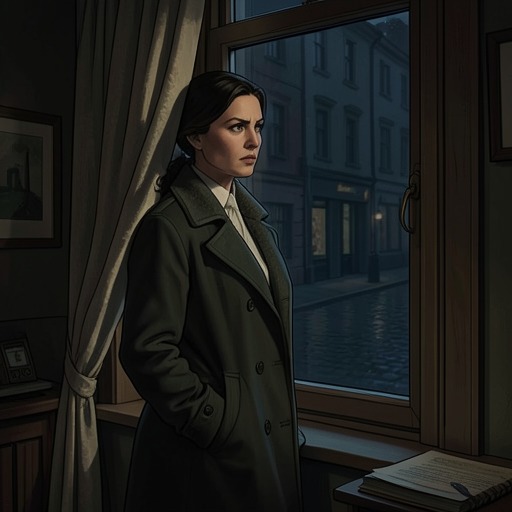
Panic RoomSanctuary, belonging, and escape converge at Wortalleth West, where Blake finds a rare sense of safety after being displaced from her previous life. The refuge is real but borrowed: it depends on Jack Harkness, who scarcely knows her, and on a house that may soon be sold. As the property’s hidden danger emerges, the place that allowed Blake to stop running becomes a test of whether she can remain in the face of fear.
Safety as a lived condition
For Blake, safety is not an abstract promise but a daily experience rooted in the coast. She takes pleasure in the sea in all its moods, from stormy to still, and watches surf break against rocks. On windless mornings, skylarks circle above the path to the beach, while wild mustard and cow parsley brush her legs. At sunset, the colours beyond Wolf Rock make the horizon feel open and remote. The landscape contrasts with where she came from: there, she wanted to leave continually; here, she wants to stay, perhaps forever.
That desire is expressed through habits of inhabiting the place. Blake swims, walks, runs, cleans, and sells her driftwood art. Cleaning, she notes, is partly done just in case, a small act of readiness inside an otherwise peaceful routine. She values not only the view or the material comforts but the space itself: the ability to be alone, quiet, and undisturbed. The house’s distance from ordinary social demands gives her room to imagine staying without having to explain herself.
A refuge borrowed from Harkness
Blake’s safety depends on an arrangement that is intimate in its consequences but distant in its human terms. Jack Harkness has supplied a luxurious place to live, yet he knows little about her and, as she supposes, gives her no thought. He is not an obvious saviour, and she does not mistake provision for personal understanding. Still, after Muriel threw her out, access to his Cornish bolt-hole may have saved her from an unknown alternative. Blake recognizes this debt without imagining that Harkness understands what the refuge means to her.
The property’s seclusion makes the arrangement workable. Glenys Probert, the gardener, comes three days a week; a pool attendant comes as often as needed; otherwise, there are few visitors. When Harkness’s legal troubles reach the news, Blake wonders whether the press will investigate the Cornish house. Their failure to do so is a relief: she hopes they do not know about the place, which she suspects may be one of Harkness’s greatest secrets. His trouble also means he is unlikely to arrive by helicopter, leaving Blake more fully to herself.
The refuge nonetheless has an ending built into it. Blake understands that, however resolutely she pretends otherwise, her arrangement with Harkness cannot last indefinitely. That knowledge separates comfort from security: she can enjoy the present, but cannot make the place hers or rely on it as a permanent home.
The threat inside the refuge
The prospect of a sale turns that uncertainty into an immediate problem. Harkness does not own Wortalleth West; his wife does, and she wants to sell while he is in trouble. A quick sale requires vacant possession, and a lawyer’s instruction to solve the cleaner problem makes Blake’s presence sound like an obstacle to be removed. When Don Challenor tells the lawyer her name, Blake notices the difference between being treated as an anonymous inconvenience and being acknowledged as a person. She wonders whether Don might be brought to care what happens to her.
Blake sees two possible responses and neither is safe. She could leave quietly, but has no idea where to go and cannot imagine finding another place that offers comparable security. Or she could remain and ask a lawyer in Helston to argue that she has squatter’s rights. That course risks questions about her identity and past that she cannot afford to have asked. With both departure and resistance carrying danger, she decides that delay is her only hope, and that Don may help create it.
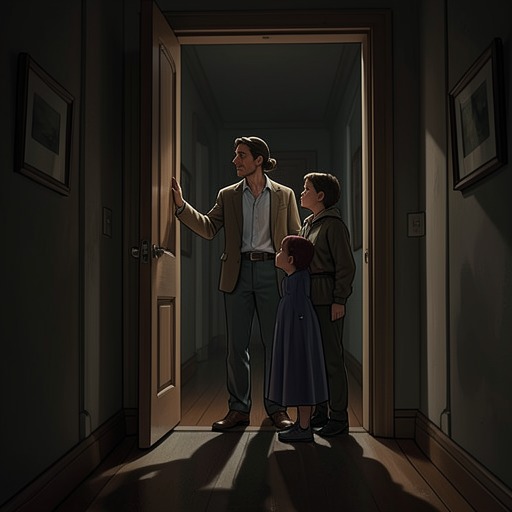
The locked steel door changes the meaning of the house more radically than the sale threat. Don identifies a sliding entrance that should be open but is locked from the inside, although it can only be locked from within. Blake had intended to invent a threat; instead, she is confronted with a real locked-room problem she cannot explain. The discovery makes the refuge feel suddenly unsafe. Her first question is whether someone is inside, but Don considers that unlikely. The uncertainty itself is enough to undo the ease the house had offered.
The road, fear, and the decision to stay
After Dale leaves, Blake cannot settle. Wortalleth West now seems watchful, secretive, and ominous, as though something bad is waiting to happen. She considers leaving, and Glenys Probert’s recollection of her father’s advice—that a person must know when to move on and take to the road—gives that possibility the weight of inherited wisdom. Blake’s earlier life has already taught her how to get out: leaving Birmingham eventually brought her to this house, at the very edge of England.
Yet escape is no longer an uncomplicated answer. Blake had promised herself she would never run from anything again. She knows Don may be right that they should get away, but recognizes that giving in to fear repeatedly raises the question of when fear will ever end. In a decisive moment beside the blue water, she understands that she hates Amos French as well as fears him, and that the hatred grows out of the fear. The coast that first represented peace now becomes the setting for confronting a threat rather than simply retreating from it.
Belonging without permanence
The concept’s central tension is that Blake can feel at home without possessing the conditions that would guarantee a home. Her attachment to Wortalleth West is concrete—its sea, paths, solitude, routines, and protection—but her right to remain is precarious, and the person who enabled her stay is implicated in dangers she does not understand. Belonging therefore appears as something she experiences before she can secure it, not as a settled status.
The narrative places two forms of movement in opposition. Flight has protected Blake before and brought her to a place where she wants to remain; refusing to flee is now a deliberate act, not proof that danger has disappeared. The house’s concealed door sharpens that conflict by making sanctuary itself uncertain. Blake’s wish to stay is not a denial of risk, just as leaving would not be a simple return to freedom. Her struggle is to distinguish a necessary escape from the reflex of always yielding to fear.